






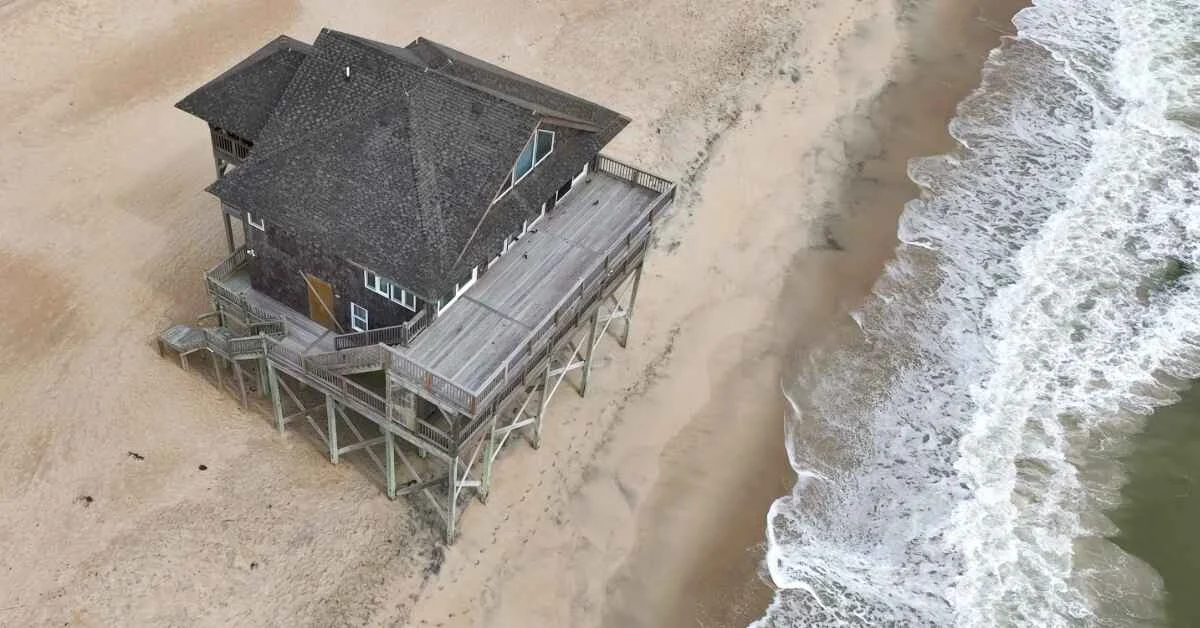
The New Jersey Department of Environmental Protection (NJDEP) officially adopted its sweeping Resilient Environments and Landscapes (REAL) rule amendments on January 20, 2026, marking one of the most significant overhauls in decades to the state’s land use and coastal zone regulations – including significant updates to flood hazard areas and stormwater and freshwater wetlands resiliency.
The REAL rules are part of the New Jersey Protecting Against Climate Threats (NJ PACT) initiative — a comprehensive effort aimed at addressing climate change impacts in New Jersey through regulatory reforms and environmental protections — and seek to align New Jersey’s regulatory framework with current climate science, sea-level rise projections, and intensifying flood risks.
The following breaks down some of the most impactful changes you should know:
More Rigorous Reviews for Coastal Development and Permitting
REAL introduces far more detailed standards across multiple rule chapters, meaning many activities that previously fell under permits-by-rule or general permits may now require more formal and technically rigorous review.
For instance, the newly strengthened Coastal Zone Management Rules and Flood Hazard Area Control Act Rules, which impose forward-looking design and elevation requirements for areas projected to face tidal flooding, eschew the streamlined general permits-by-rule for many common project types, instead offering permits-by-registration, which require submission via the NJDEP online portal. Additionally, revised stormwater and freshwater wetlands rules require more site-specific evaluation of hydrologic change, redevelopment impacts, and ecological function, further reducing situations where applicants can expect simple or automatic authorization.
Increased Flood Hazard Elevation Requirements
One of the most transformative aspects of REAL is the new minimum elevation requirement of +4 feet above the Federal Emergency Management Agency’s (FEMA’s) Base Flood Elevation (BFE) for new structures and substantially improved buildings. This reflects updated sea level rise projections from experts at Rutgers University, the National Oceanic and Atmospheric Administration (NOAA), and the Intergovernmental Panel on Climate Change’s (IPCC) scientific assessments. The rule applies broadly across regulated flood hazard areas and is now codified in the updated Flood Hazard Area Control Act rules. Projects in coastal or flood-prone areas must now incorporate significantly higher design elevations, which may influence grading, utility connections, egress, structural loading, and floodproofing strategies.
Structural & Design Regulation Updates for Sea Level Rise and Climate Impacts
The REAL rule introduce more stringent climate-informed design expectations, placing a heightened emphasis on resilience-based engineering and documentation during application. Examples include:
- Forward-looking coastal inundation criteria for structural siting and layout, requiring new Inundation Risk Assessment and alternatives analysis, demonstrating that future tidal flooding projections have been incorporated into design.
- Newly instituted inundation risk zones based on a four-foot sea level rise scenario, mandating additional considerations and mitigation measures for residential and critical structures at greatest risk of becoming permanently inundated.
- Prioritization of nature-based solutions, such as living shorelines, marsh restoration/enhancement, and beneficial reuse of dredged materials.
Modernized Stormwater Management Requirements
REAL significantly updates stormwater rules to reflect higher rainfall volumes and more frequent flooding statewide. Project teams must revisit hydrologic models, water-quality treatment assumptions, and basin redesign strategies early in the planning process. Key changes include:
- Modernized standards addressing chronic flooding and more intense precipitation patterns.
- Redevelopment projects with motor-vehicle areas must now provide stormwater quality treatment, even without adding impervious surface.
- Reconstruction of over a quarter-acre of impervious surface is now considered “major development” and triggers full compliance with updated stormwater design and water quality standards, including volumetric reduction standards to better manage more intense storms and pluvial flooding.
- Clarified rules for stormwater basin wetlands, allowing certain maintenance and rework activities without triggering wetland violations if ecological function is preserved.
How Kleinfelder Can Help
REAL is a comprehensive and complex regulatory update. Kleinfelder’s environmental planning and permitting, stormwater, climate, and coastal resilience specialists can:
- Review ongoing or planned projects to determine whether they qualify for legacy approval under pre-REAL rules.
- Provide technical due diligence to identify which new flood elevation, structural, stormwater, or land-use requirements will apply.
- Support clients in developing compliance strategies, redesign alternatives, and updated permitting pathways aligned with REAL.
Our team is actively tracking implementation guidance and agency interpretation to give clients the clarity they need to move forward with confidence.
See Us at the 2026 NJ Coastal & Climate Resilience Conference
Kleinfelder is proud to sponsor and attend the 2026 New Jersey Coastal & Climate Resilience Conference, hosted by the New Jersey Coastal Resilience Collaborative, March 9-11 in Galloway, NJ.
We look forward to connecting with practitioners, municipal leaders, and state agencies to discuss the REAL rules’ implications and the future of coastal resilience in New Jersey.
Contact Us
Click here to see Kleinfelder’s office locations and send us a message to connect about your project!